Caribbean Fore Reefs
A Field Guide to Life at the Edge
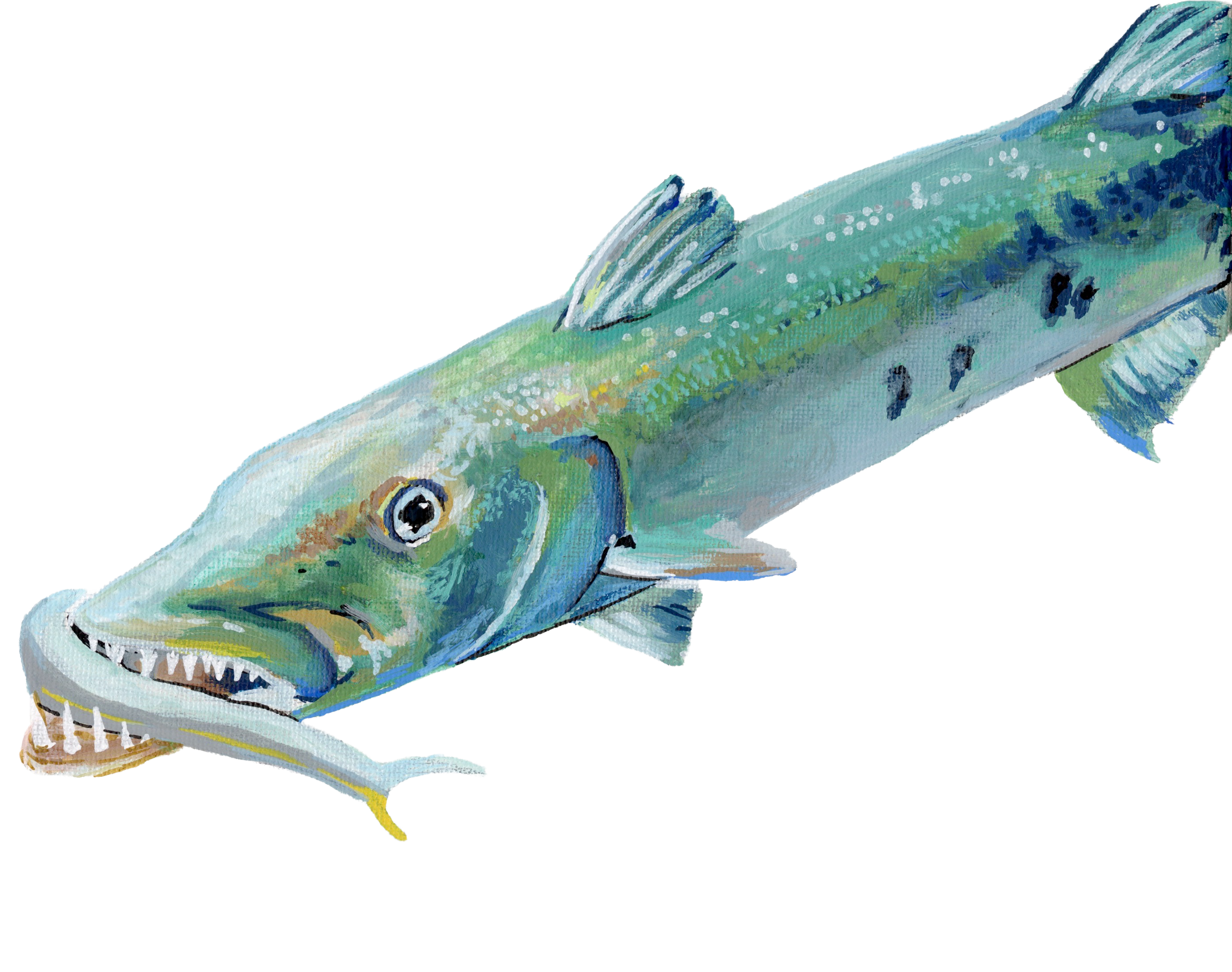
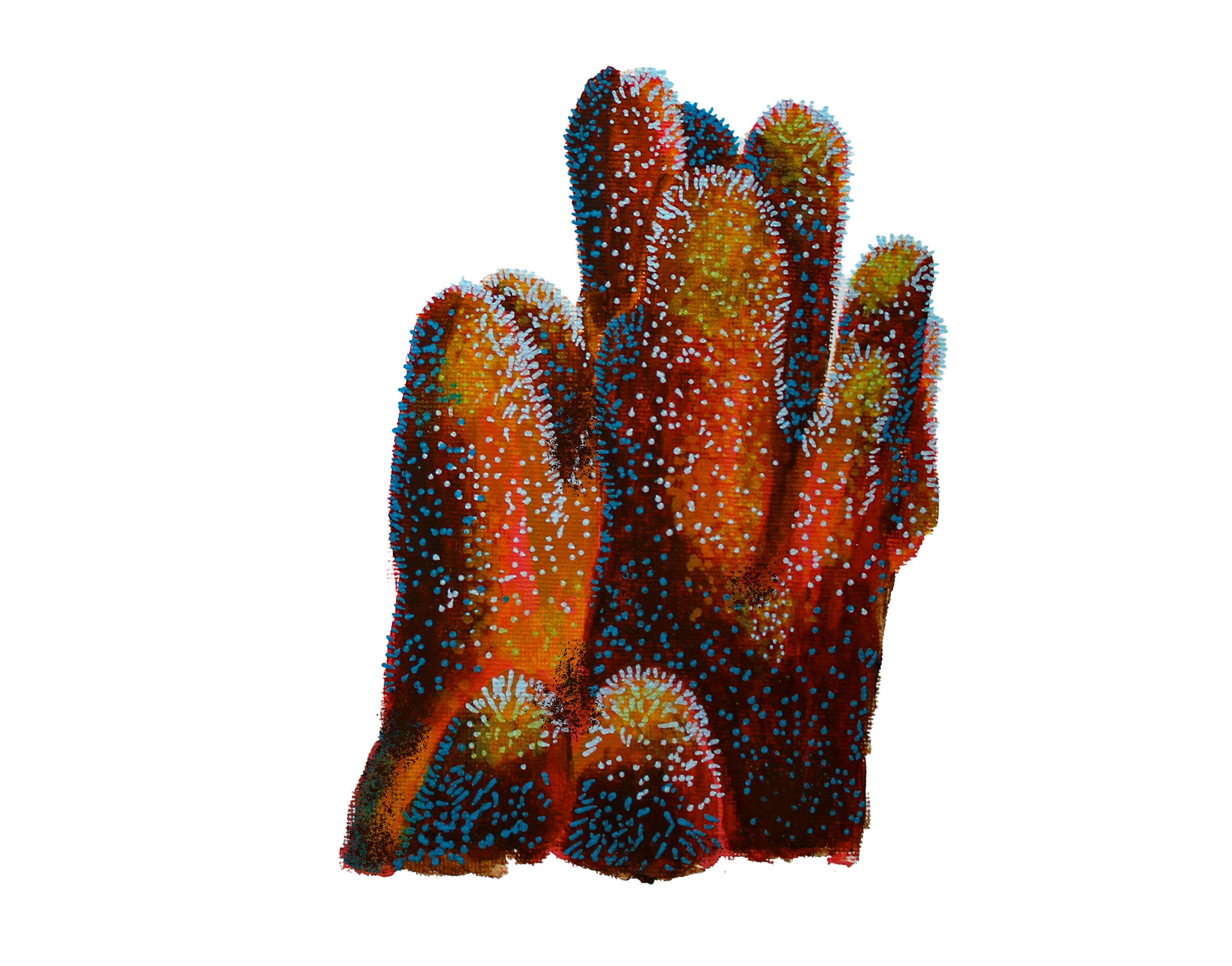
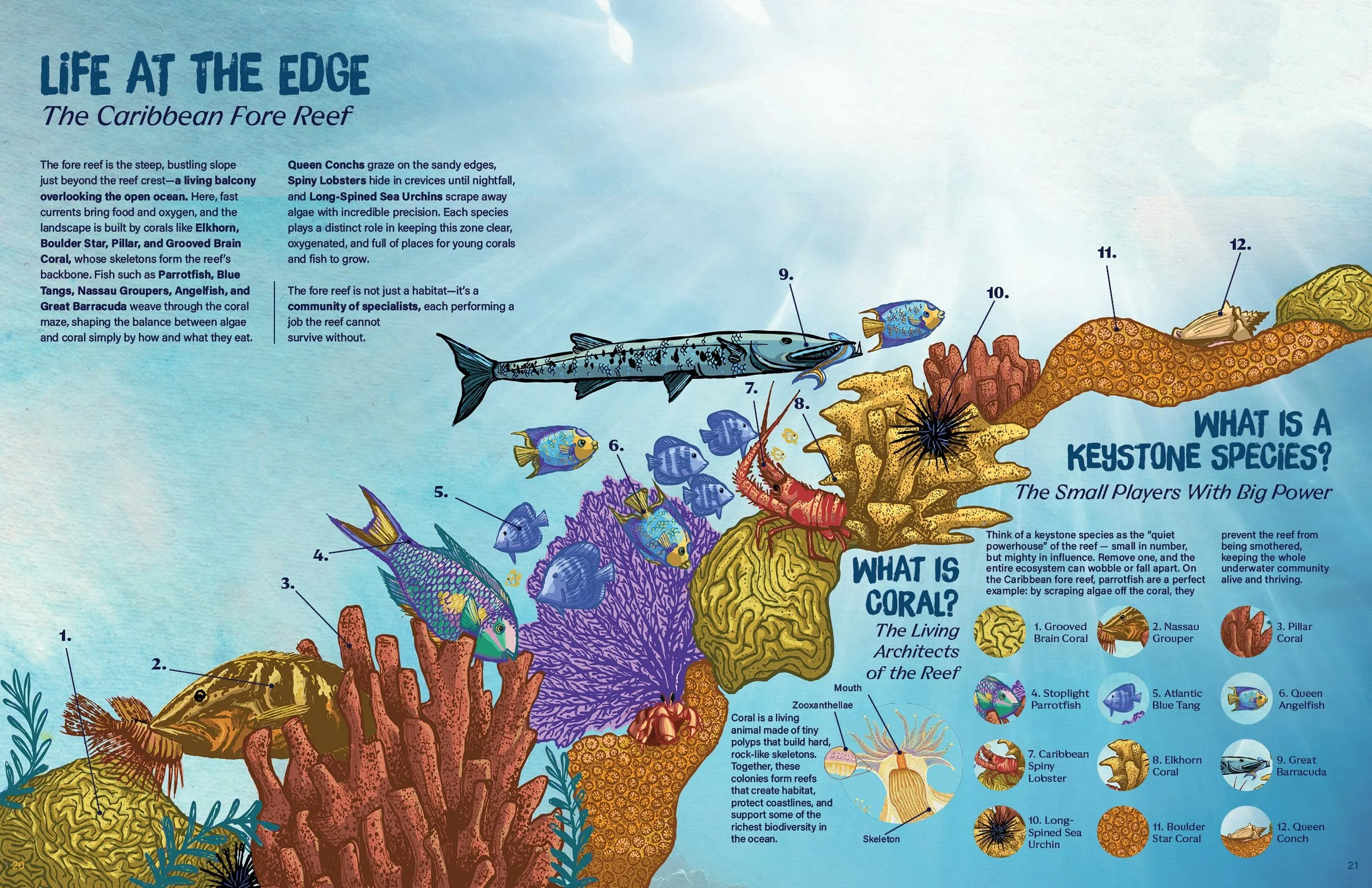
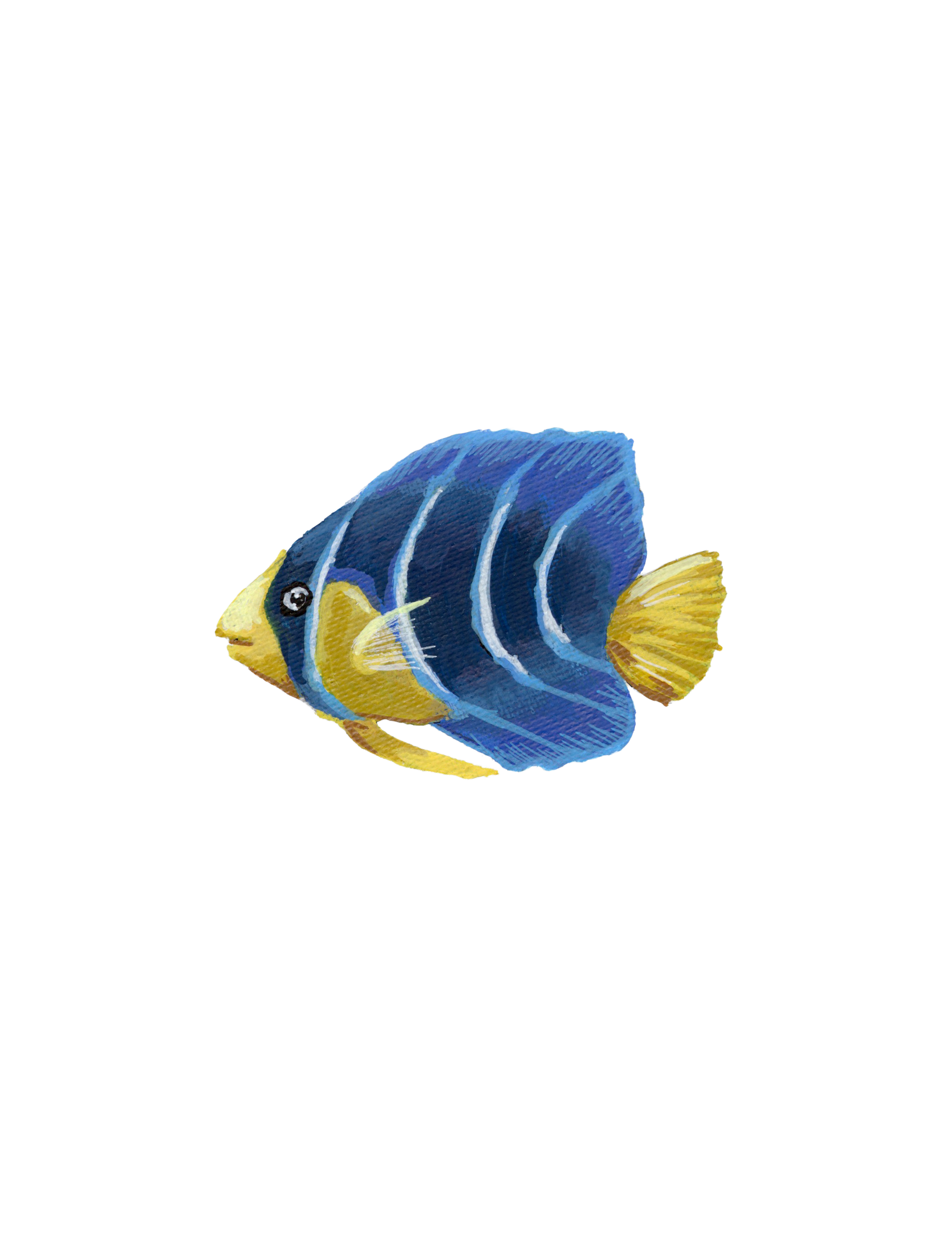
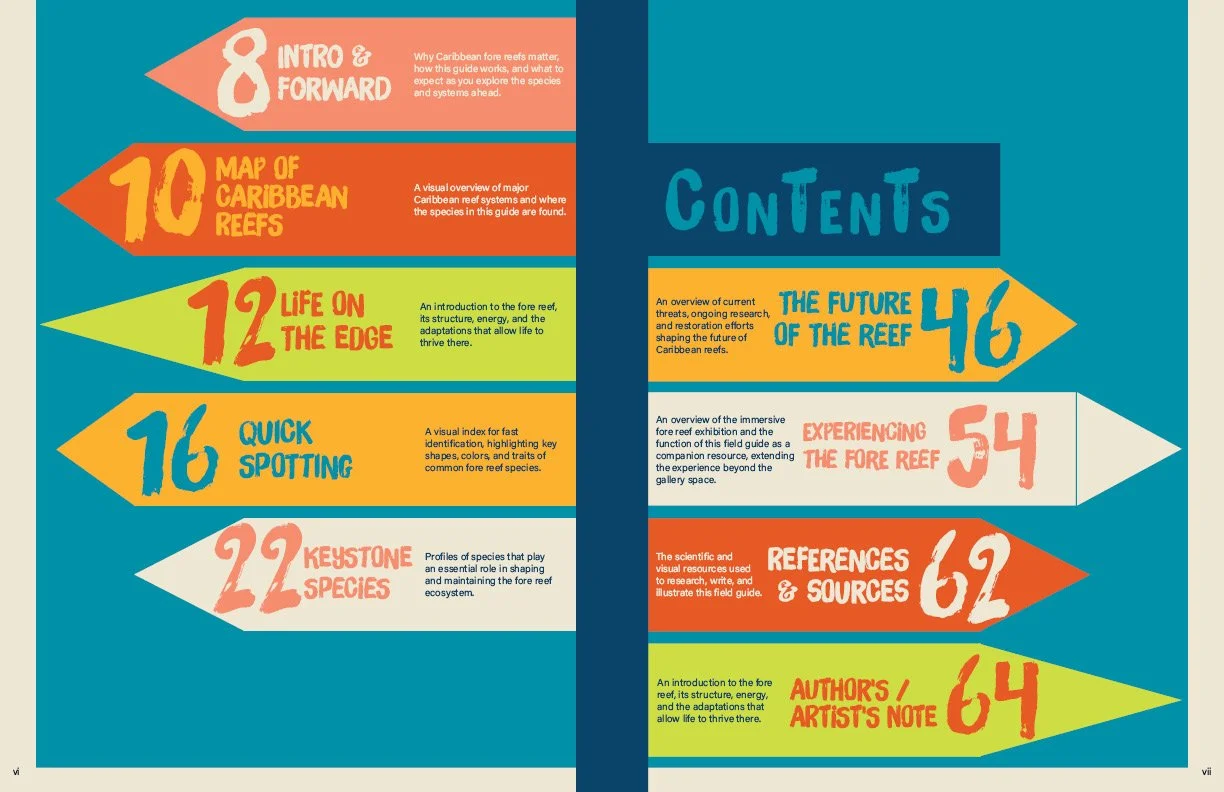
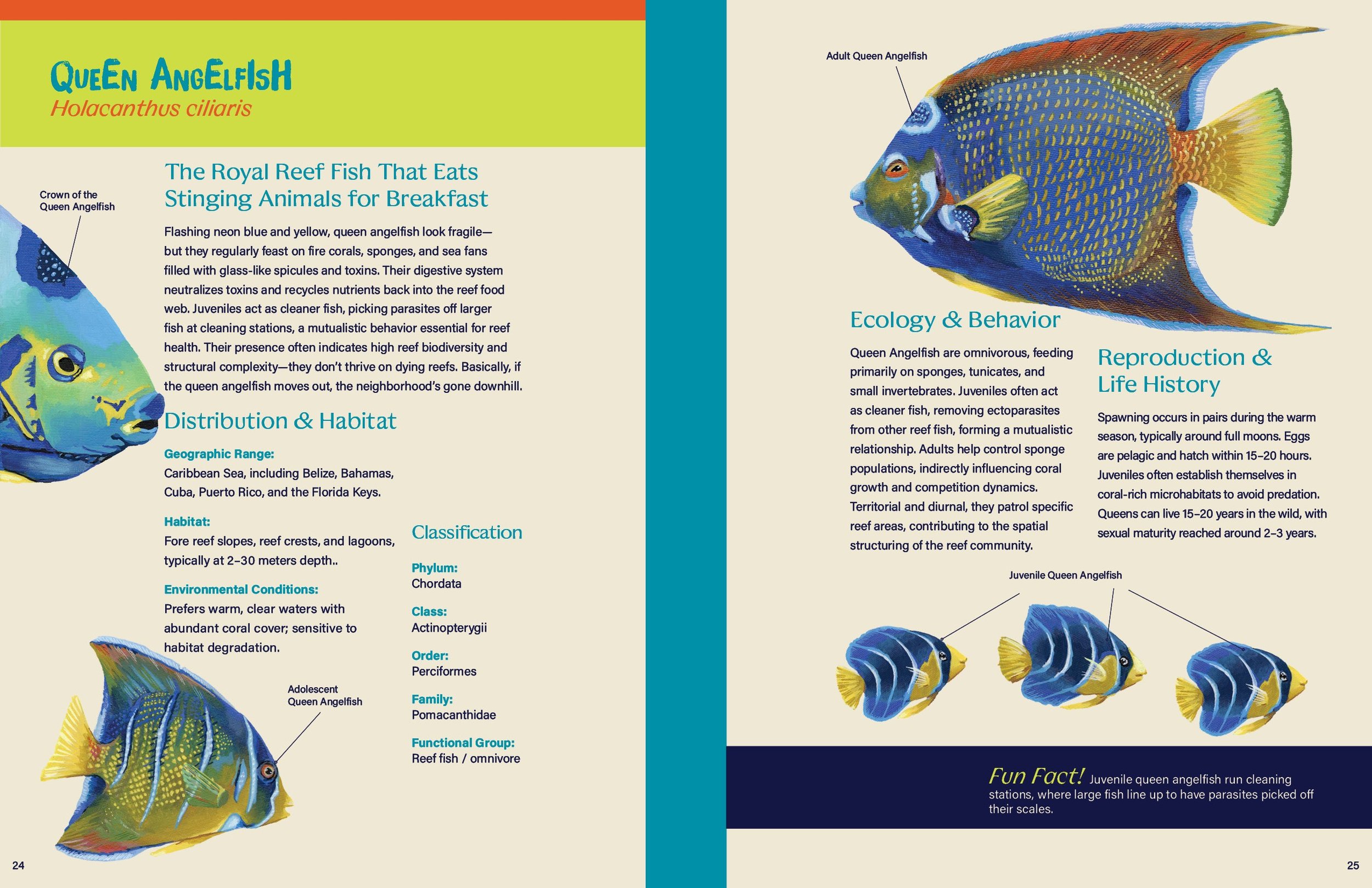
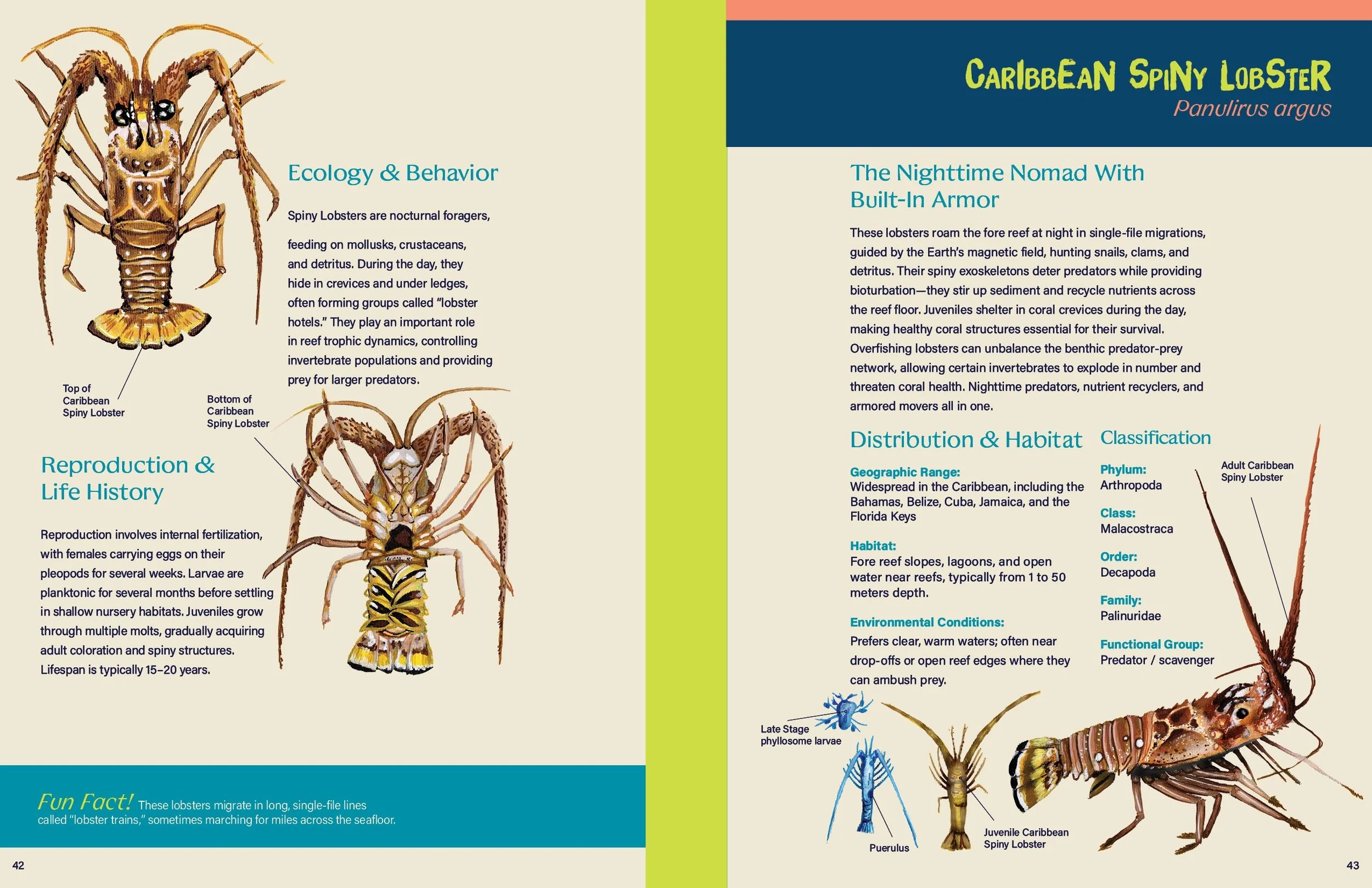
Caribbean Fore Reefs is an illustrated field guide and immersive exhibition concept centered on the biodiversity, structure, and ecological importance of Caribbean coral reef systems. Combining scientific illustration, environmental storytelling, and spatial design, the project translates marine research into an experience that feels both educational and deeply human. Through layered visuals, observational drawing, and interactive exhibition elements, the guide invites viewers to move through the reef as if they were diving alongside it: experiencing and discovering how every organism contributes to a larger living system. The project reflects my interest in making complex scientific subjects approachable through thoughtful, visually engaging design.
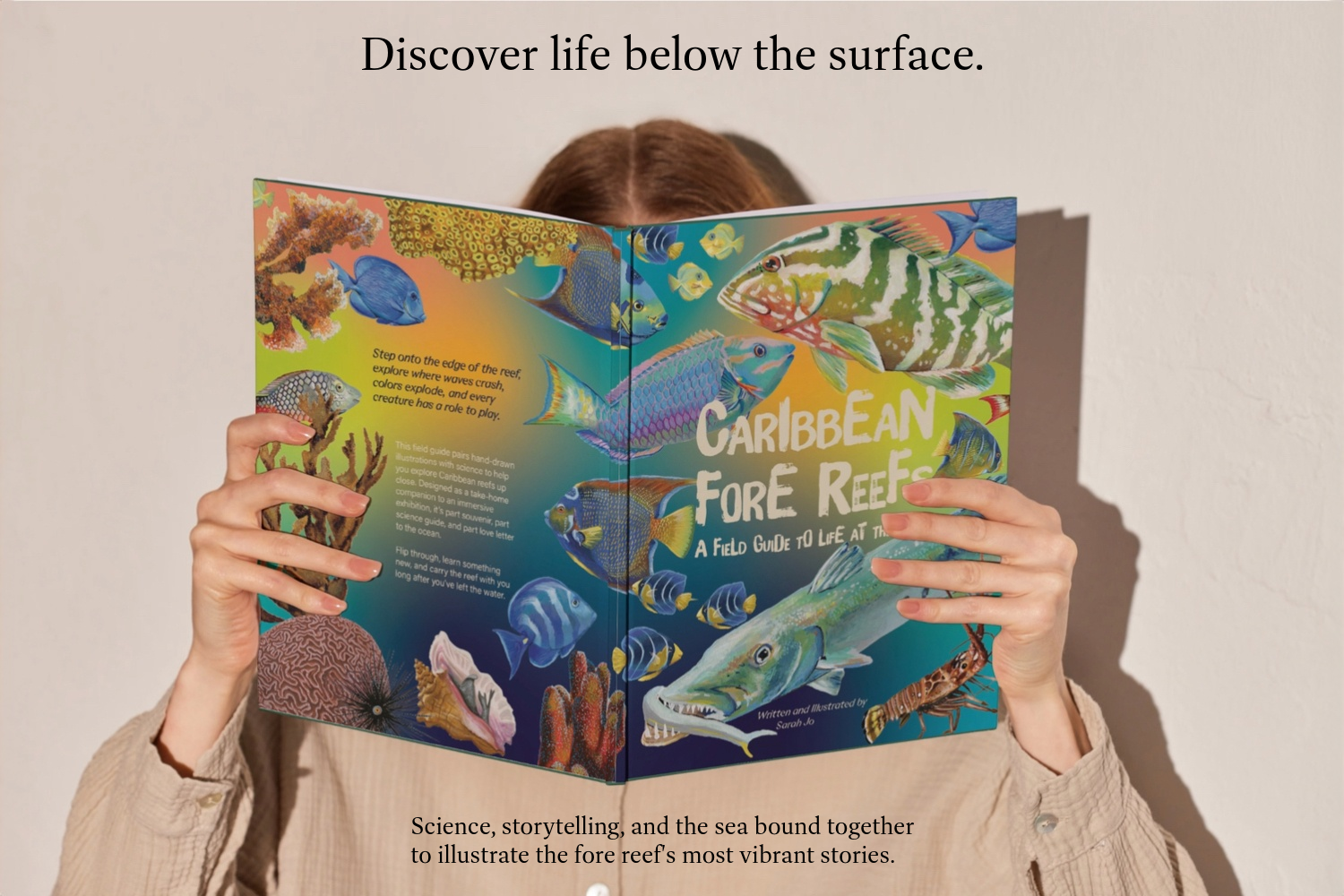
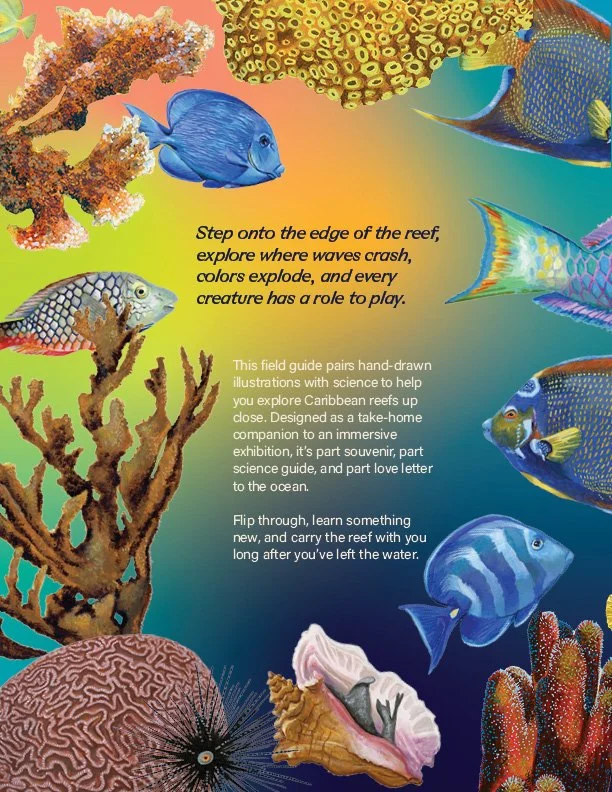
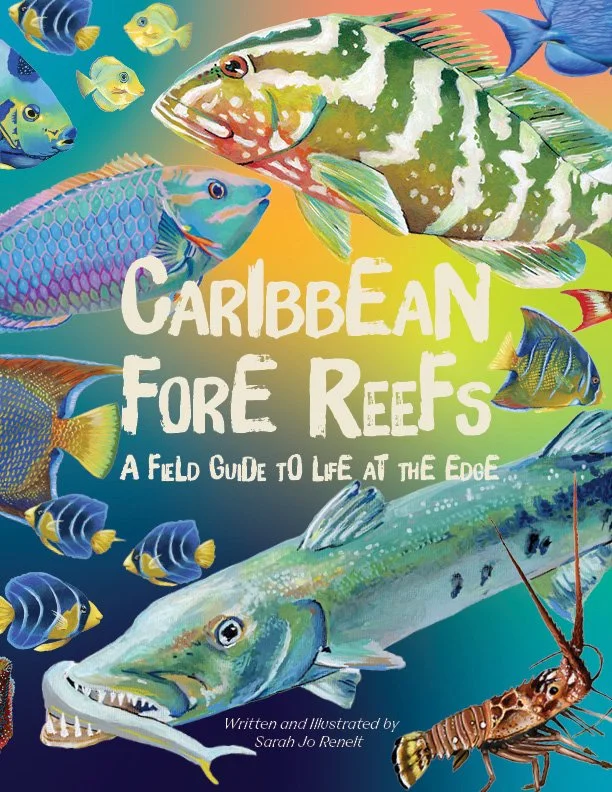
Full book PDF available upon request
Caribbean Fore Reefs
Process Book
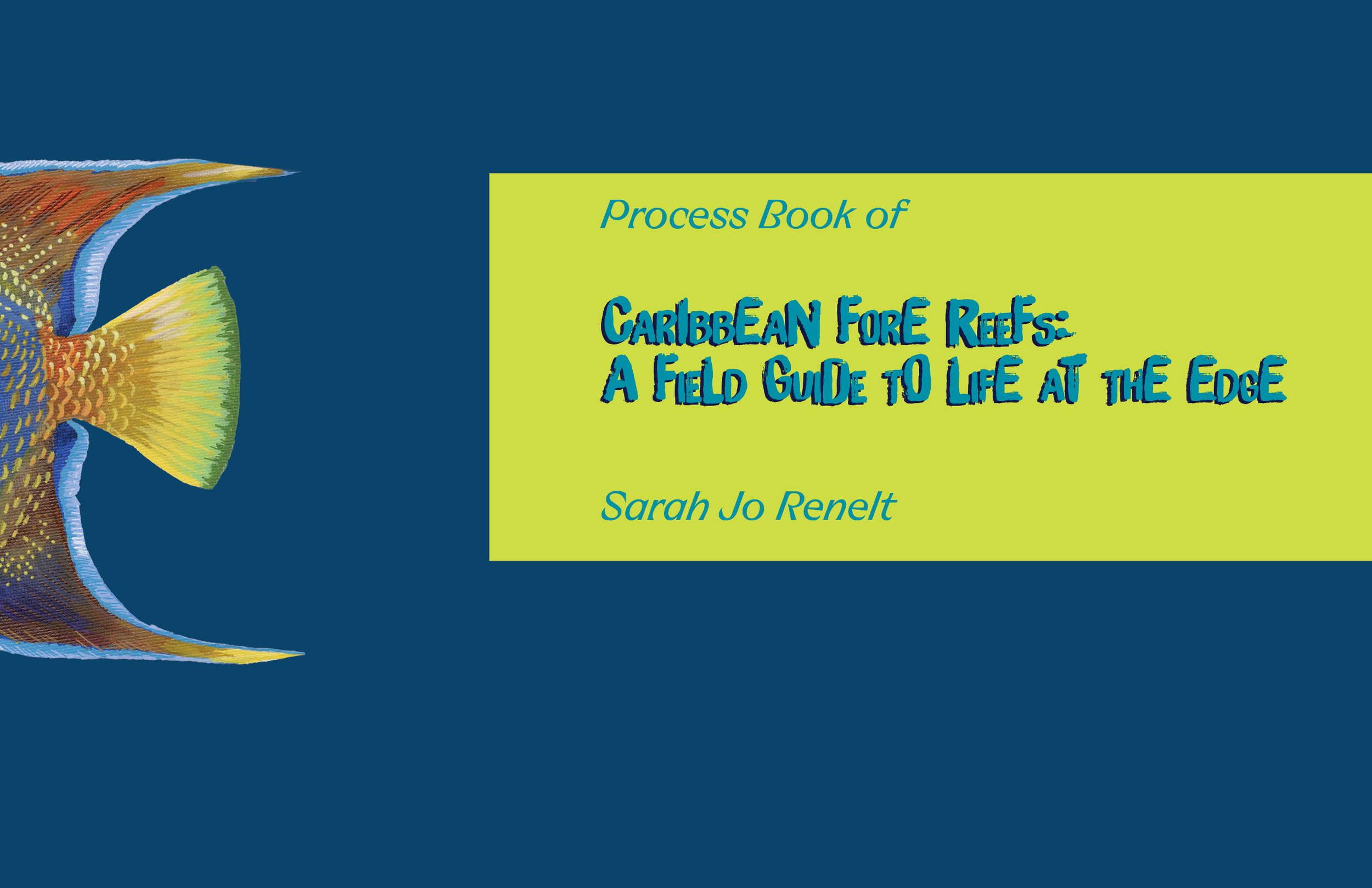
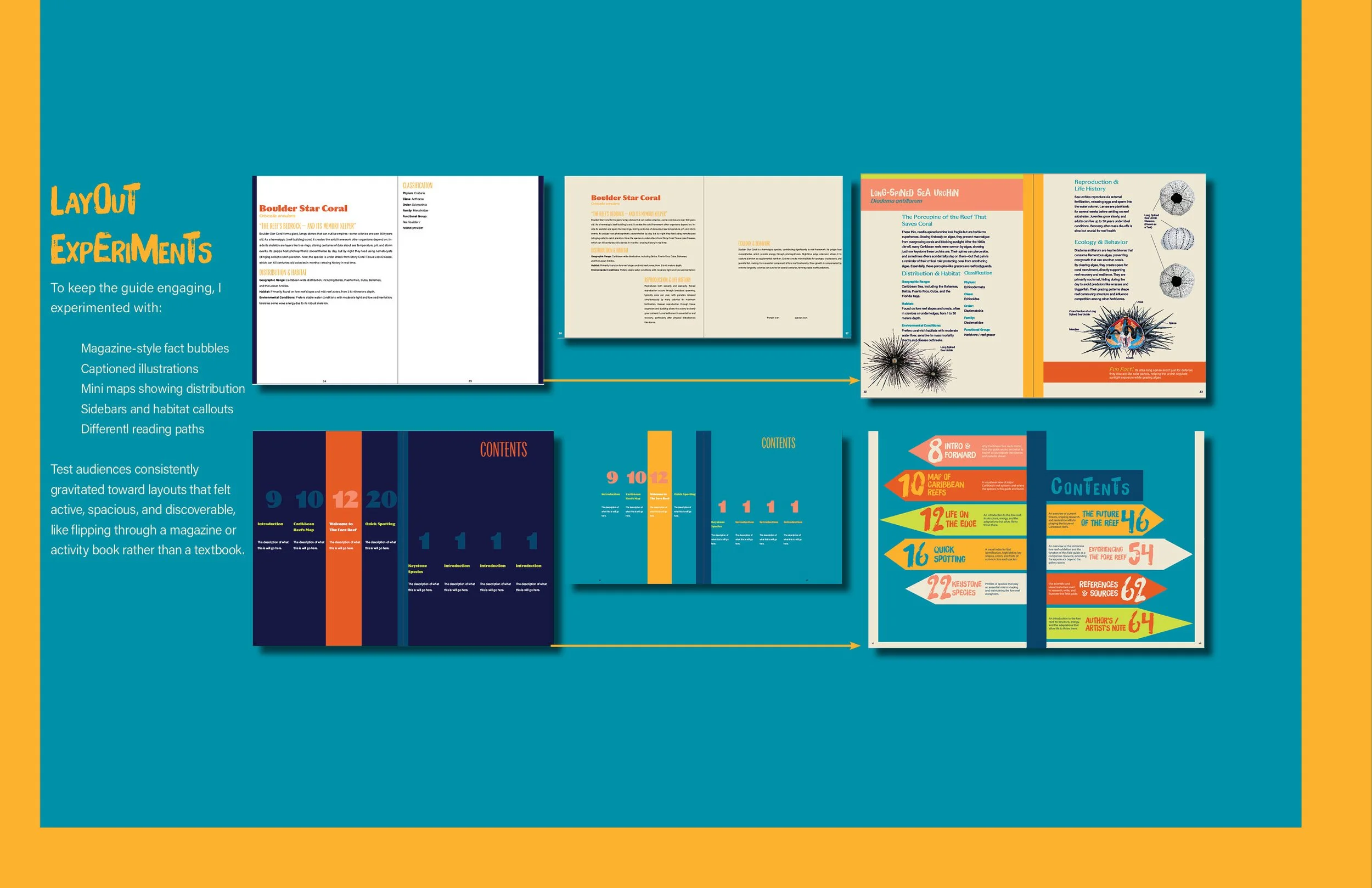
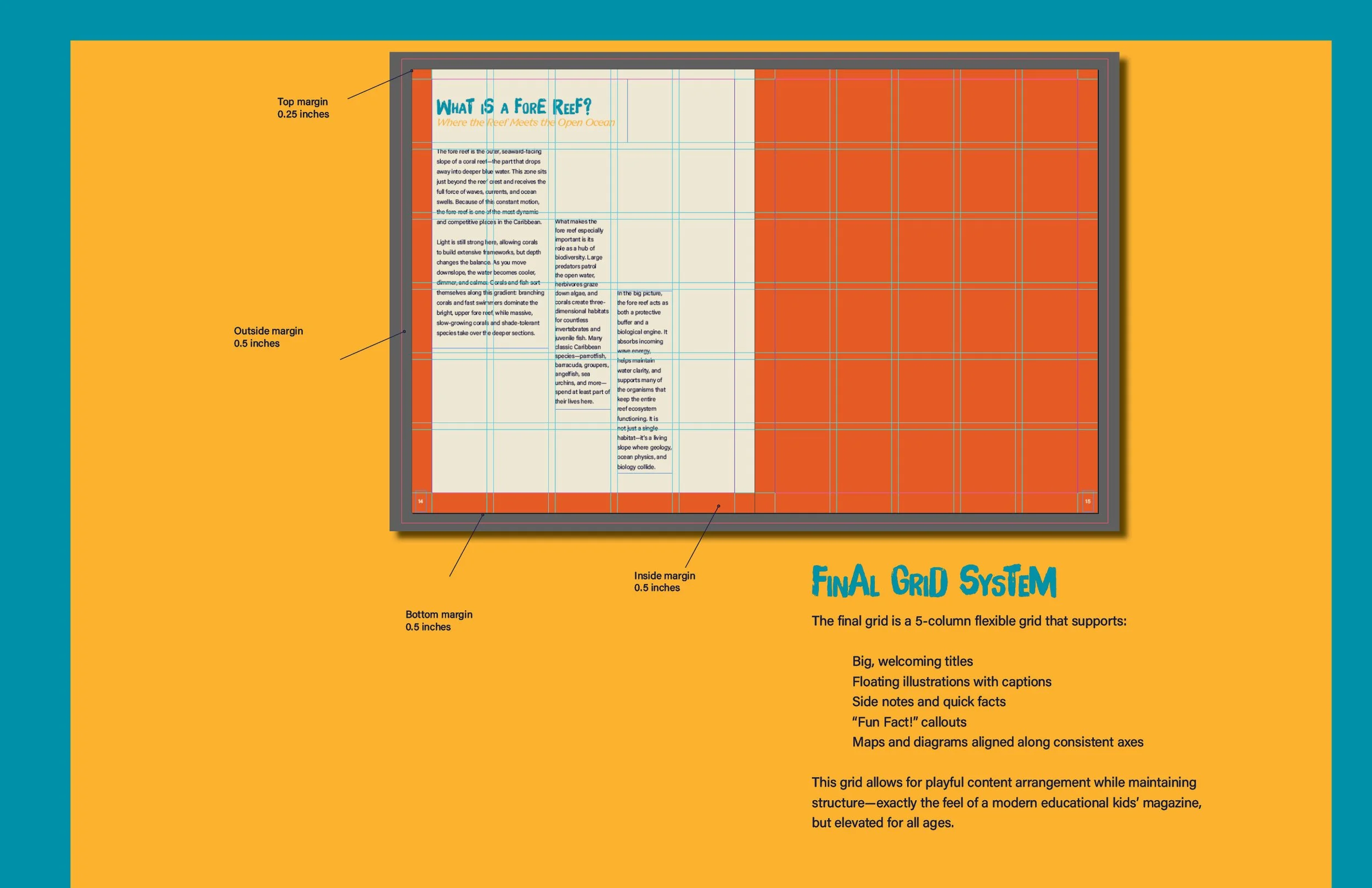
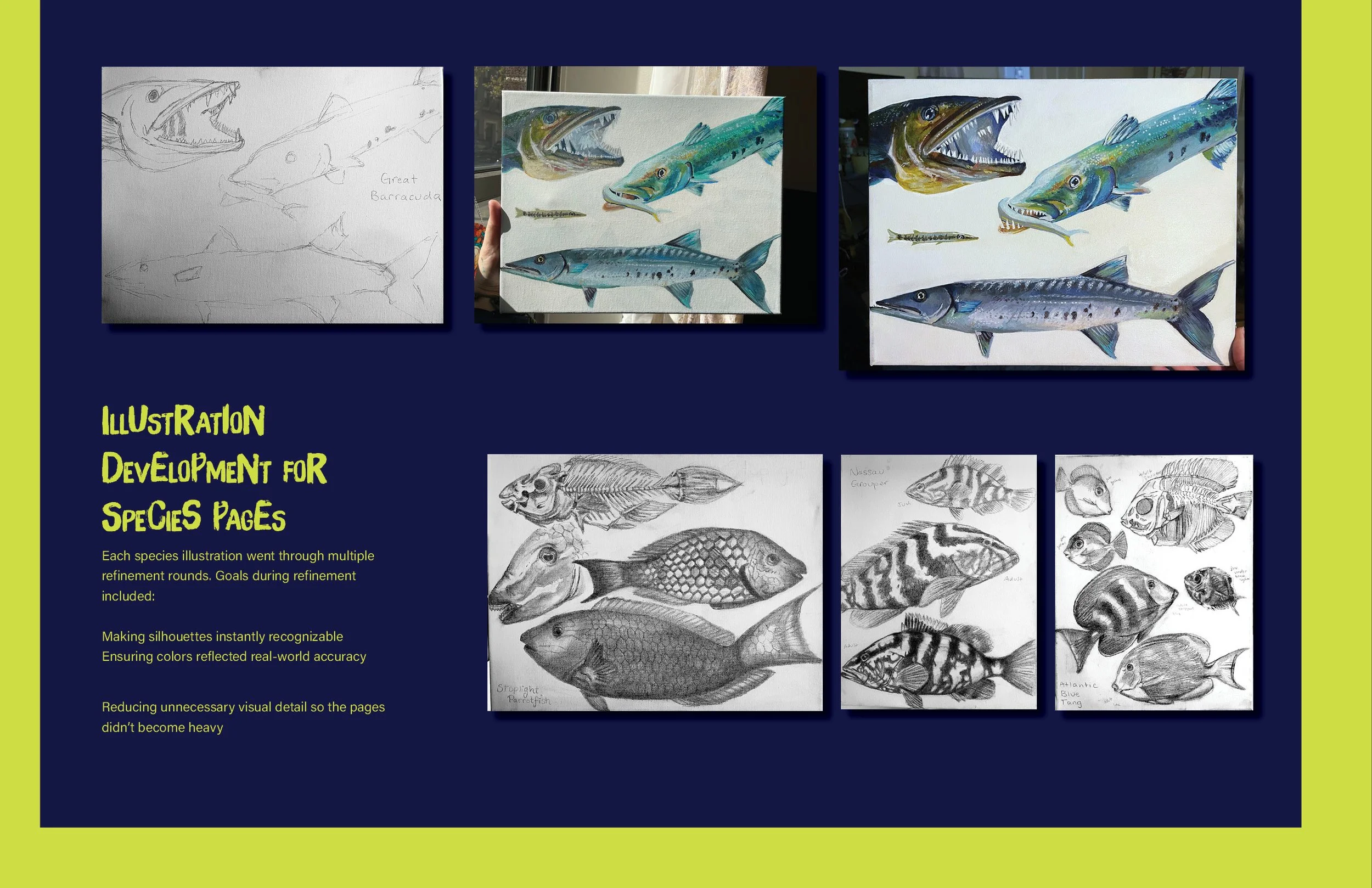
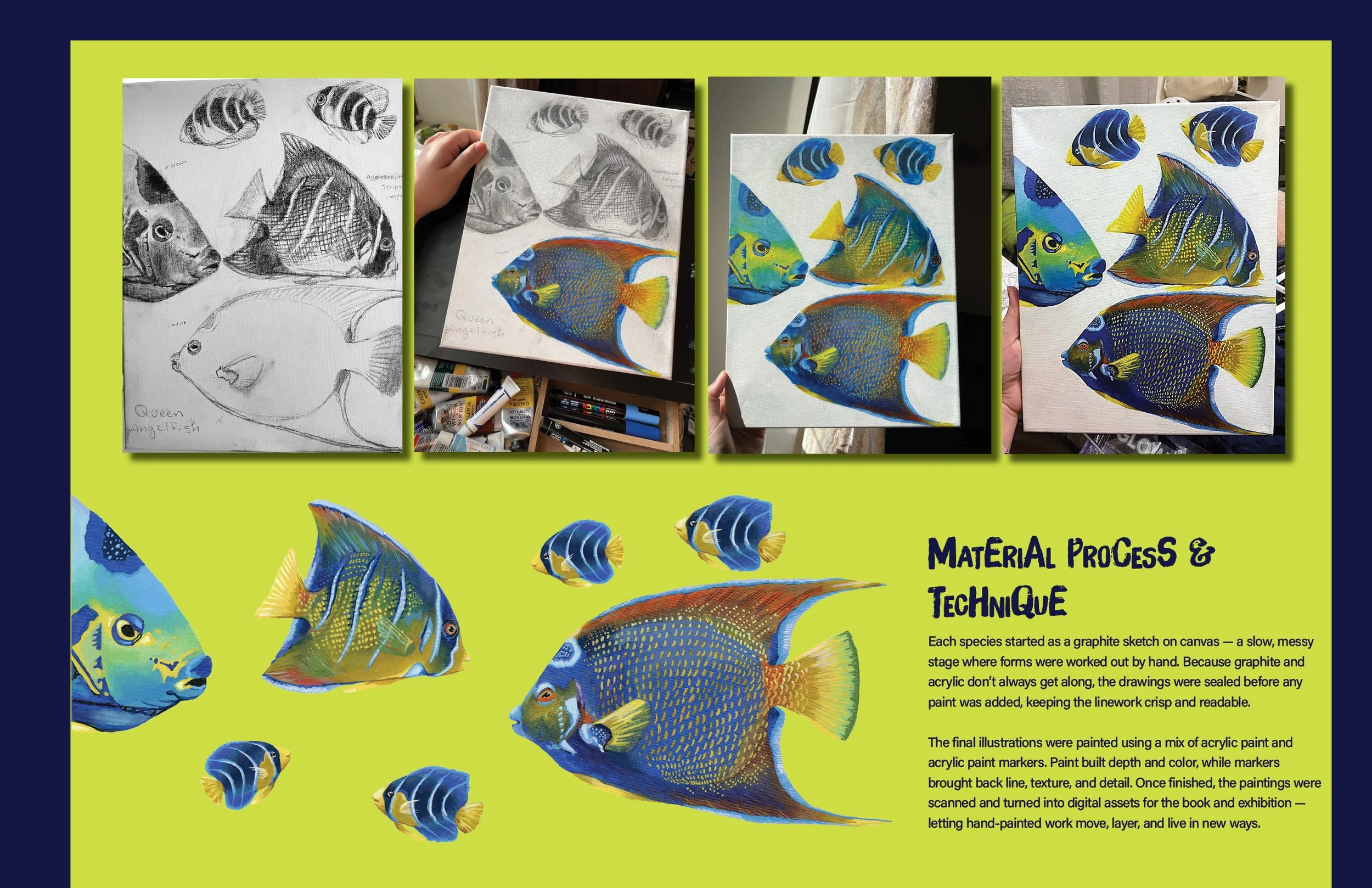
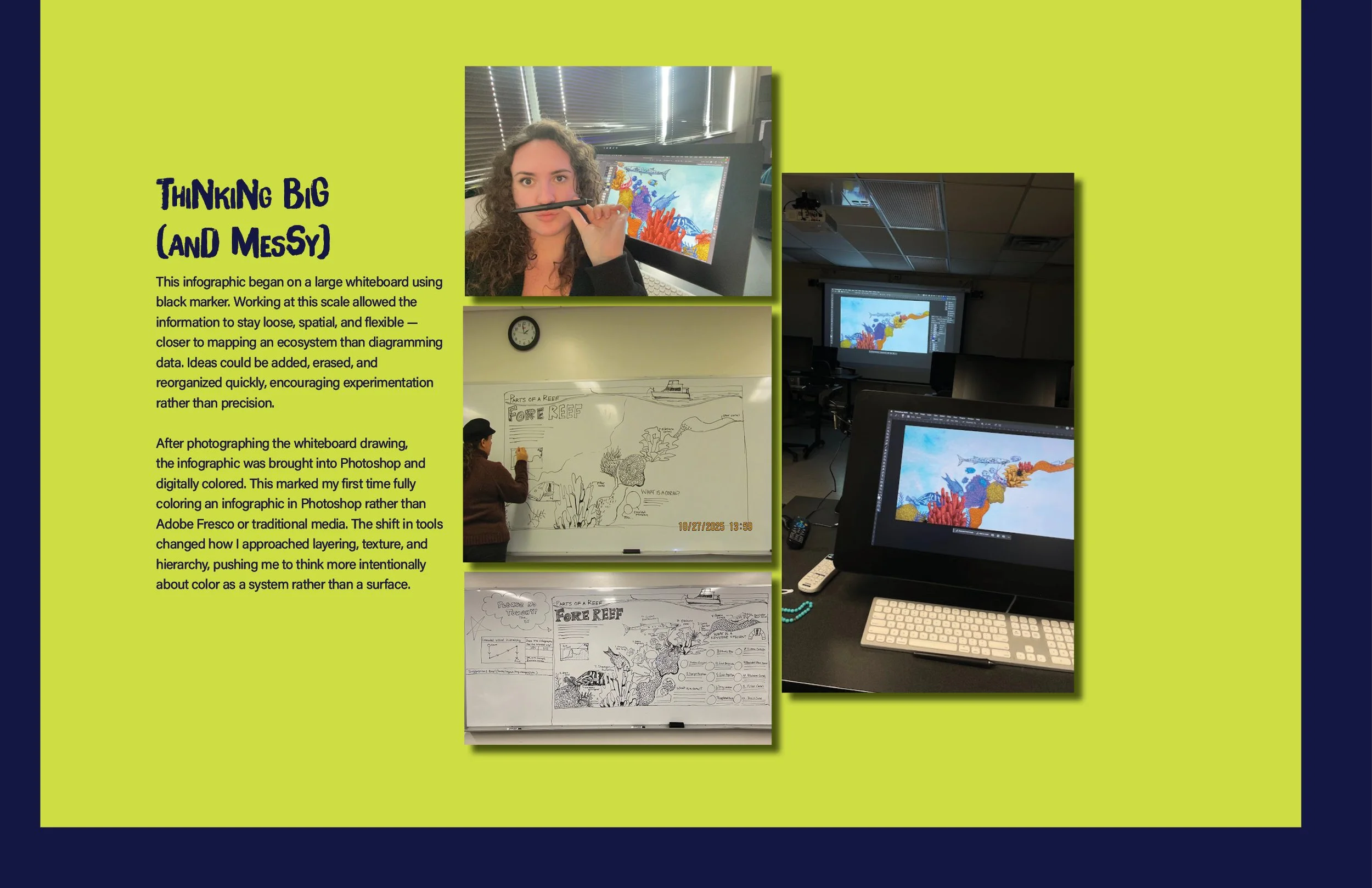
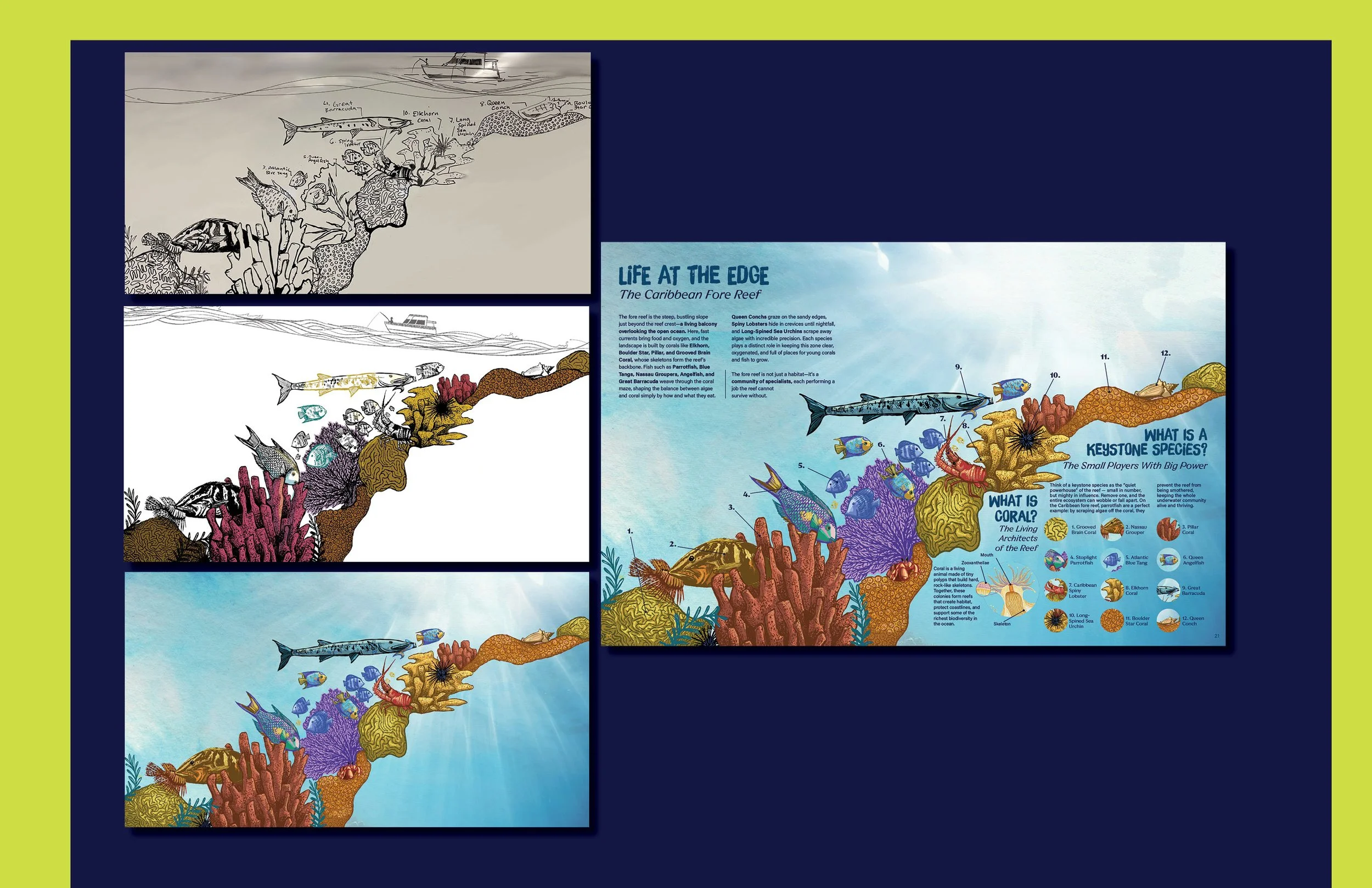
The process book documents the research, experimentation, and design development behind Caribbean Fore Reefs, from early ecological studies and species sketches to exhibition planning and final layouts. I approached the project through a balance of scientific accuracy and visual storytelling, exploring how illustration can communicate environmental systems in a way that feels immersive rather than clinical. The book includes observational drawings, mapping exercises, material exploration, and iterative design decisions that shaped both the field guide and gallery experience. More than a record of outcomes, the process book highlights how research, illustration, and narrative design can work together to create meaningful educational experiences.
Full book PDF available upon request
Living Wall
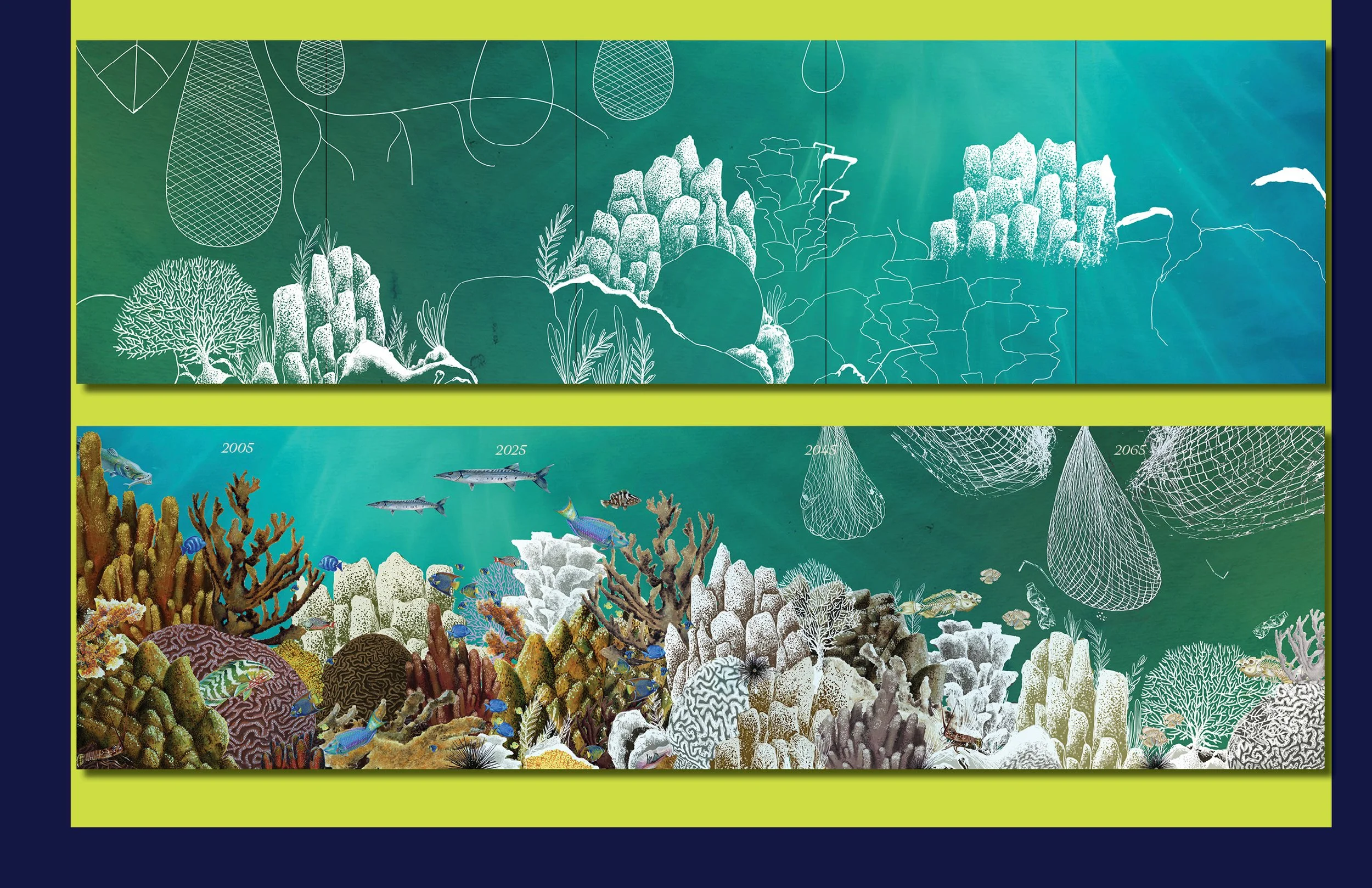
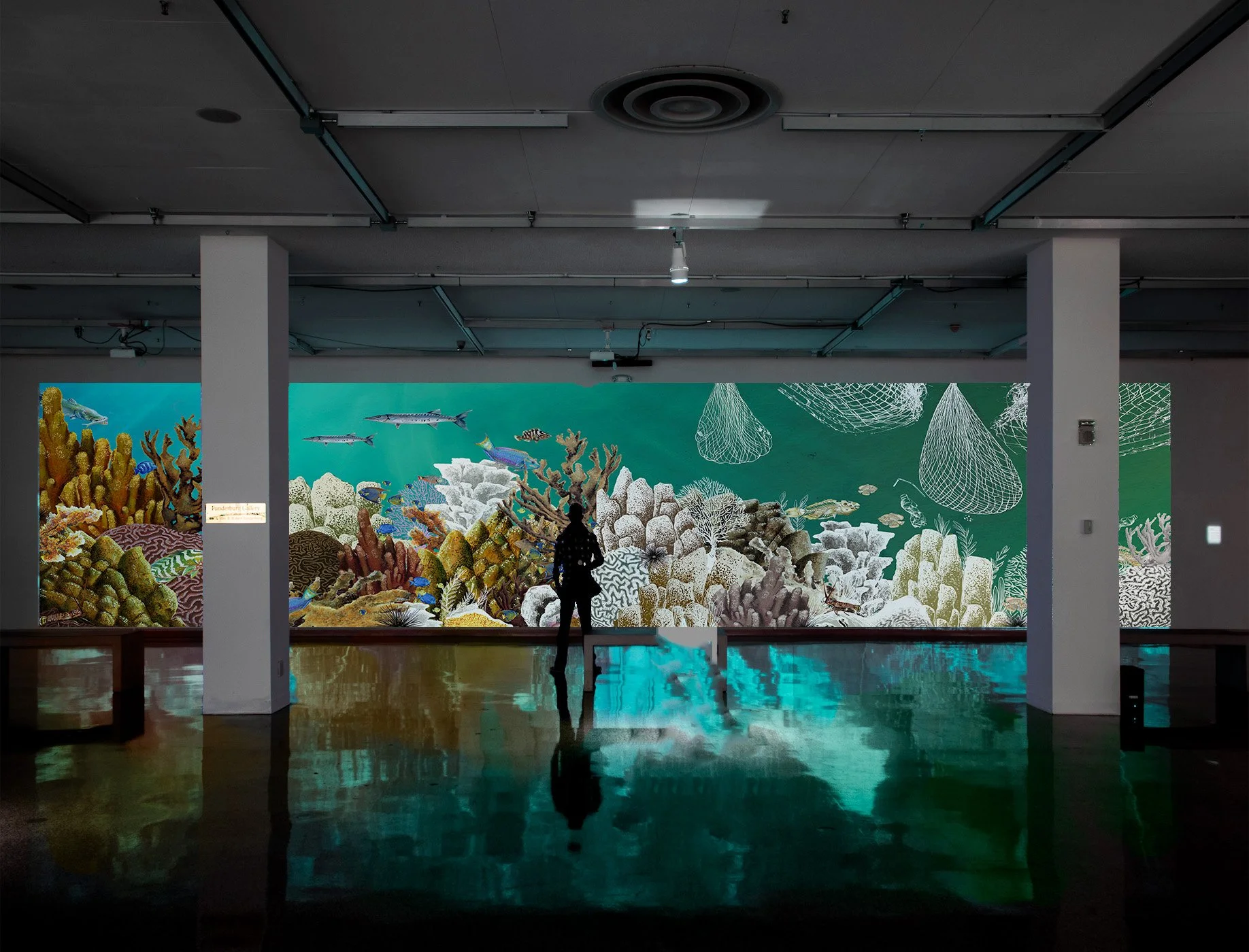
Standing in front of the fore reef at this scale, it’s impossible not to notice how crowded, layered, and alive it is. Corals build the foundation, fish weave through the structure, and every surface feels occupied. What looks still from afar reveals itself as a constant exchange of movement, growth, and survival.
Experience the Ecosystem
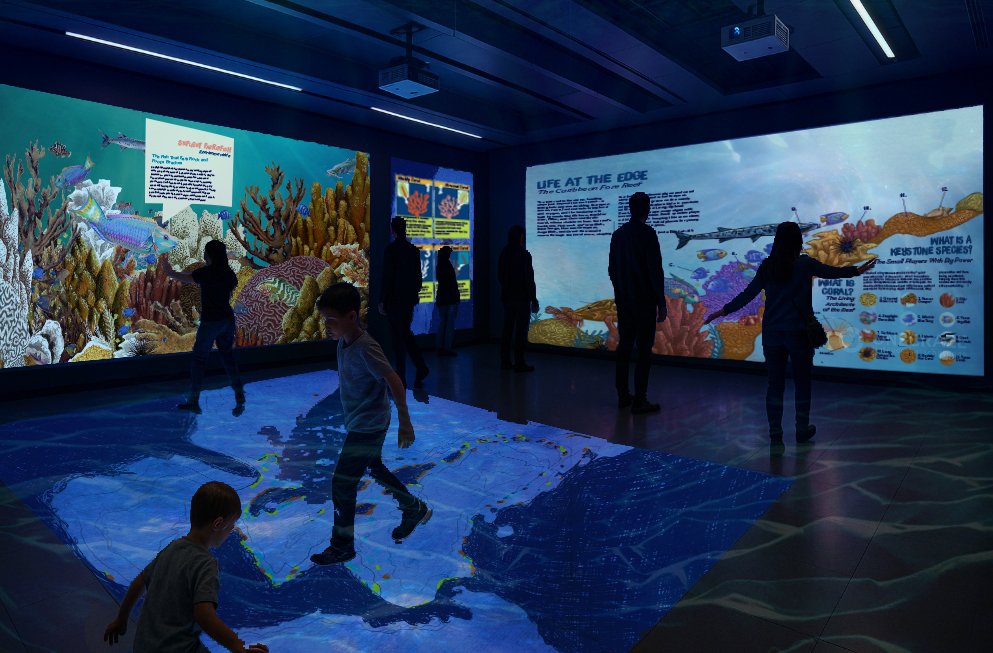
Moving through the space, the reef stops feeling distant or abstract. Species overlap, stories connect, and the boundary between observer and ecosystem begins to blur. The fore reef becomes something you walk through, not just learn about. Alive beneath your feet and surrounding you on every wall.